
GCL Forward is Garland County Library's long-range facilities initiative designed to expand access, improve services, and create modern library spaces for communities across the county. Today, more than 100,000 residents spread across 735 square miles are served by a single library facility. Through GCL Forward, the library aims to build a new state-of-the-art Main Library campus, open a North Branch currently under construction, and develop a future West Branch near the Lake Hamilton area. Together, these projects would place a library within approximately a 12-minute drive of more than 95% of county residents.
More than buildings, these new libraries are investments in literacy, lifelong learning, technology access, workforce development, and community connection. Each location is being designed to provide welcoming spaces where children can learn, students can study, families can gather, entrepreneurs can innovate, and residents of all ages can connect with one another.
Read our letter from the director here.
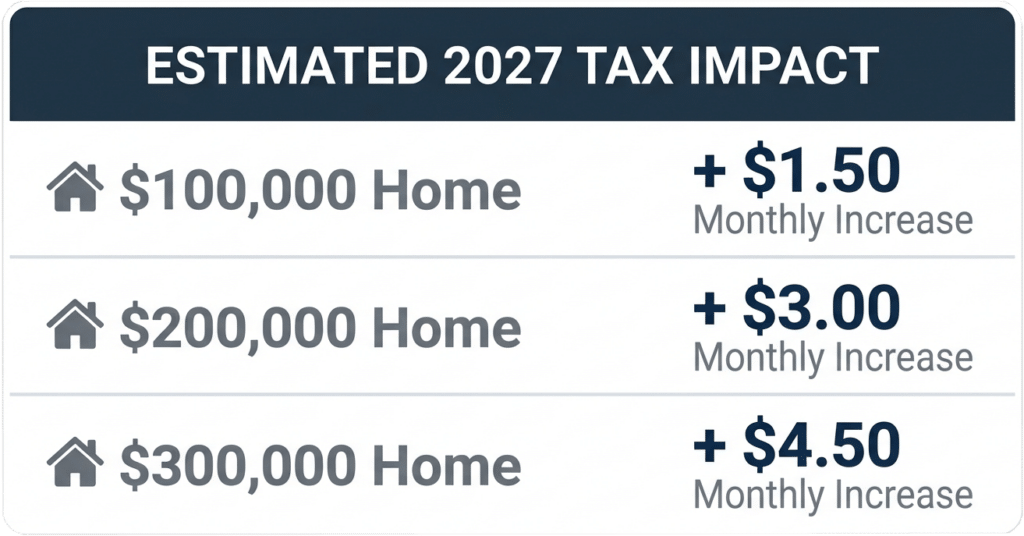
The estimated tax impact is approximately $18 per year for every $100,000 of a home's market value. For the average Hot Springs home (valued at about $245,000), the estimated increase would be approximately $44 per year, or about $3.67 per month.
The North Branch is the first phase of the GCL Forward initiative and is already under construction. Located to serve the Hot Springs Village and Jessieville areas, this facility will provide residents of North Garland County with convenient access to books, technology, programs, and library services much closer to home.
The branch is being developed with the goal of reducing travel barriers and ensuring that families, students, and lifelong learners have easier access to the resources they need. Along with its own collection tailored to the unique needs of the community, the North Branch will remain connected to the entire Garland County Library system, giving patrons access to materials and services from every location.
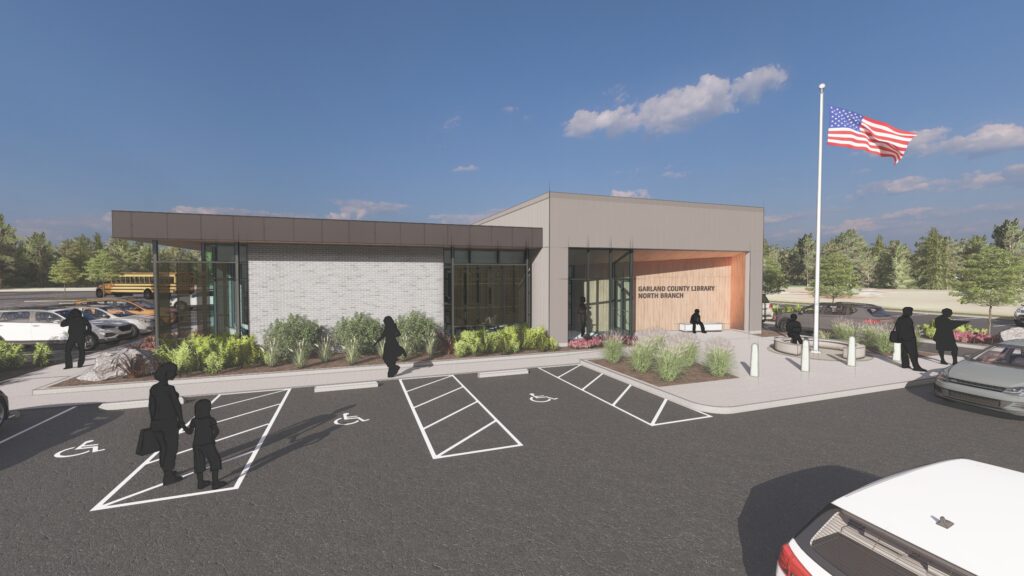
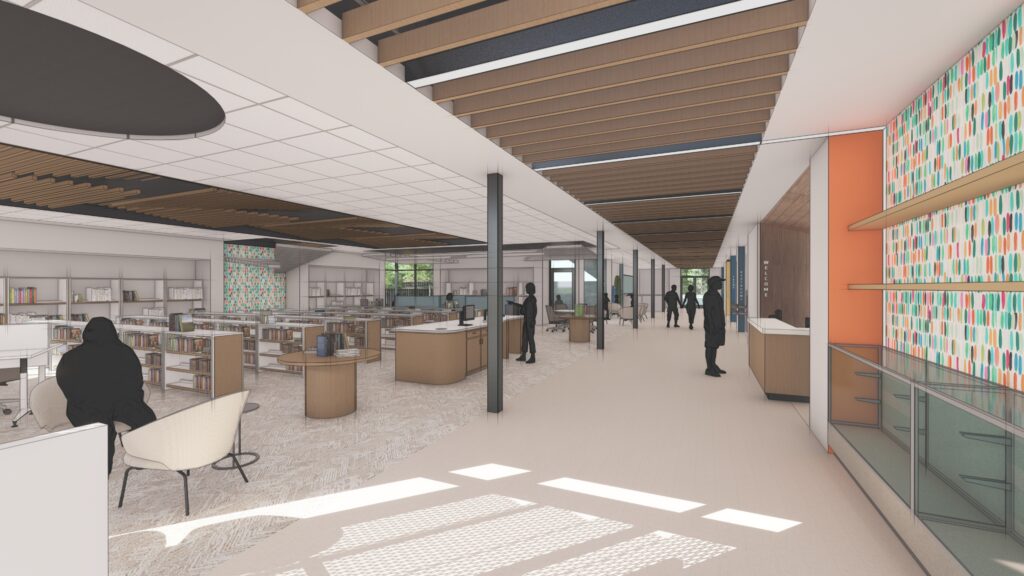
As the first tangible step in the GCL Forward vision, the North Branch represents a commitment to making library service more accessible, equitable, and responsive to the growing needs of Garland County.
The proposed West Branch will bring library services closer to one of Garland County's fastest-growing areas. To help move the project forward more quickly, the branch will be based on the same general model being developed for the North Branch, allowing the library to build on work already underway rather than starting from the beginning.
While the two facilities will share a common foundation, the West Branch will be shaped by the needs of the Lake Hamilton community. Collections, programs, and spaces will be developed with local residents in mind, creating a library that feels connected to the people it serves.
Designed as a welcoming destination for families, students, and lifelong learners, the West Branch will expand access to books, technology, educational programs, and community gathering spaces, helping bring library services within reach of more Garland County residents.
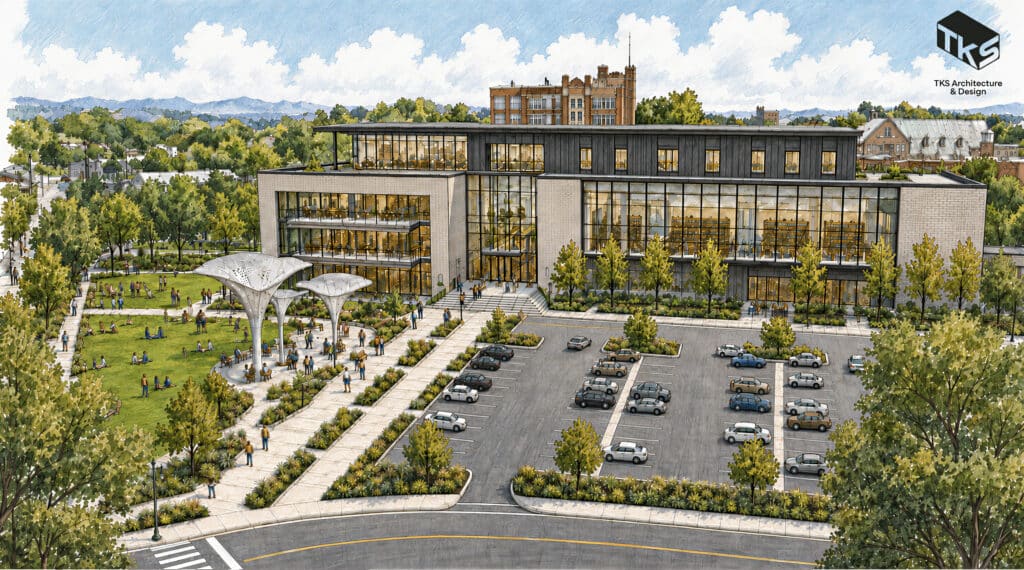
The proposed Main Library campus will serve as the centerpiece of the GCL Forward initiative. Designed as a modern civic destination, the new facility will provide expanded space for collections, programming, technology, community events, and public services that are difficult or impossible to accommodate within the current building.
Plans for the new campus envision a vibrant community hub featuring expanded children's and teen spaces, additional study and meeting rooms, flexible workspaces, makerspaces, digital media opportunities, and areas designed for educational and cultural programming. The goal is to create a library that reflects the needs of today's community while preparing for the opportunities of tomorrow.
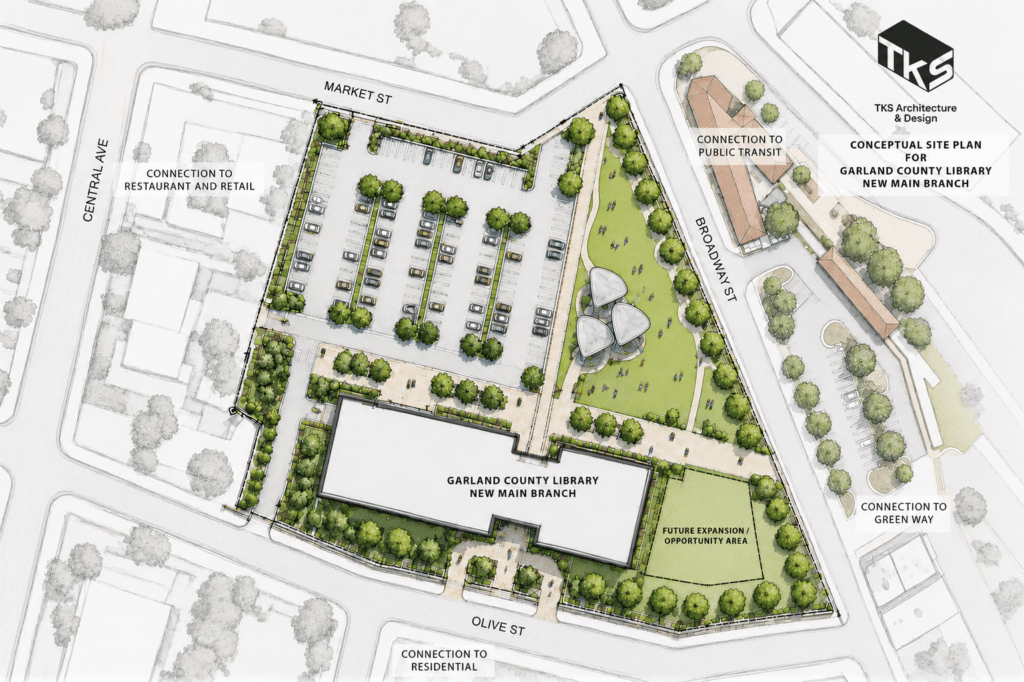
As a centrally located destination, the new Main Library will support learning, innovation, civic engagement, and community connection while working in partnership with the branch libraries to ensure high-quality service throughout Garland County.
The idea for building new libraries came from you, dear reader. The plan was developed after a lengthy strategic planning process that involved public surveys, focus groups, and listening sessions. Participants in the strategic plan asked overwhelmingly for branch libraries and a new main with all the amenities found in a modern public library- makerspaces, expanded children’s and teen’s areas, art galleries, performance spaces, teaching kitchens, study rooms, etc.
Garland County is the only county library in Arkansas with a population above 45,000 that tries to serve its entire community out of one building. GCL is struggling to meet the demand for services from our residents and the needs of our community. As the county has grown, the demand for public services has grown exponentially. While the population of Garland County has increased a steady 27% in the time since our existing building was envisioned, GCL’s collection usage has increased 200% over that same period. The demand for meeting spaces, study rooms, resources, and cultural and recreational programs have risen to levels that were not imagined when our existing facility was designed.
We cannot expand the existing building. The size of the existing building already exceeded what building code allows for, as it is larger than the allowable square footage for the use and the type of construction. No additional space may be constructed unless it is separated by two-hour fire-resistant construction. An exception to this is a mezzanine open on all sides. Building the mezzanine would require us to rip the front of the building off to allow heavy machinery into the structure to reinforce the pylons. This would also require the library to close the main branch for up to two years. The cost of building the mezzanine is almost 3x the cost per square foot of new construction.
Expanding the existing building doesn’t address the needs of the people who live in rural parts of the county. Those folks account for 60% of the total population of Garland County and GCL is a county library system, not a city library. We have a directive to serve all of the people of Garland County, not just the City of Hot Springs.
That depends on a lot of factors, but the average is $3.80 per month if you pay monthly or $45.60 if you pay annually. Thanks to the hard work of the Arkansas Legislature, every homestead owner in Garland County will be receiving a $75 homestead tax credit on their tax bill next year. For seniors whose property taxes froze when they turned 65, many of you will still be paying less in taxes next year than you were in previous years, while building a legacy for kids, teens, young families, and seniors alike. Simply put, this is the cheapest it will ever be to address the needs of the entire county.
The library is currently funded with an Amendment 38 tax dedicated to maintenance and operations. We cannot legally divert funds from our maintenance and operations to cover capital expenditures. The Arkansas Constitution is clear on that. We set up a nontax account a long time ago to start raising funds for capital projects, since we cannot use our existing tax revenue for capital expenses. We do not have enough in our existing nontax funds to build more than the North Branch. We fundraised and saved for years just to build one branch. It would take over a decade to do it again.
The plan is for GCL to become a three branch system, putting a public library within a 12 minute drive for 95% of the county’s population. The new main has been proposed for the old Ouachita Memorial Hospital site on Olive and Broadway and the library is in talks with the realtor for that property. We have also been in discussions with another property owner downtown on a similarly situated property near the Hot Springs Creek Greenway, should the hospital site not be feasible. The North Branch is currently being constructed outside the West Gate of Hot Springs Village and we are currently scouting locations for the West Branch, hopefully near Lake Hamilton School.
Our new main library will be a hub of creativity, the arts, and learning, featuring cutting-edge technology, makerspaces, entrepreneurship programs and digital resources that empower patrons to explore and grow. And yes, wherever our new main library ends up, there will be free parking. The new main, and the branch libraries, will provide study rooms, community meeting areas, and flexible workspaces to accommodate students, job seekers, entrepreneurs, and lifelong learners. Most importantly, we will be supporting families and children with expanded children’s areas, dedicated spaces for teens, early literacy programs, and interactive learning spaces to foster a love of reading and learning from an early age through adulthood.
Yes. Amendment 38 of the Arkansas Constitution requires the tax to sunset as soon as the bonds are paid off.
Building new libraries has a long-lasting, positive effect on the community, childhood reading, and the economy. A recent study by the Federal Reserve Bank of Chicago showed a steady increase in children’s reading scores, book checkouts, and program participation over the 7 year period following library capital projects. New libraries equate to higher reading scores in kids, increased literacy rates community-wide, and greater quality of life for residents. Expanding the existing facility would not address the needs of the entire community.
New libraries help the local economy by triggering “halo spending,” with one third of library users visiting nearby businesses before or after each trip to the library. For downtown Hot Springs, that will mean roughly 150,000 additional visits per year from locals to downtown businesses. For Hot Springs Village and Pearcy, it will mean new opportunities for small businesses to expand and reach new customers.
Not only do new libraries help address the literacy crisis in our community and help boost the economy, but new libraries also serve as vital community hubs (the proverbial “third space” between work and home) that provide substantial social and civic benefits to their communities. Libraries also serve as critical civic infrastructure in times of crisis, providing power and internet during natural disasters, acting as distribution points for water, food and medicine, and promoting social wellbeing through neighborhood connections.